



Brokers of influence within the judiciary such as former investigator Petyo “Euroto” Petrov and the late Martin Bozhanov, known as “The Notary”; a Supreme Judicial Council whose term has expired; an acting, practically “eternal,” Prosecutor General; a scandal involving joint travel by a senior prosecutor and the central figure from The Eight Dwarfs; cases kept on ice by small circles that hold others in subordination; and other proceedings terminated as bargaining chips for long-term appointments, despite constitutional mandates and fixed terms. An untouchable Prosecutor General, a Prosecutorial College that observes the law only when convenient, contests and fails to comply with rulings of the Supreme Court of Cassation – these are but a few examples of entrenched practices within the judiciary that have nothing to do with the standards of morality, ethics, and accountability expected of judicial power, and which have led to the loss of public trust.
In this context, we are hearing the word “vetting” ever more often – the comprehensive review of magistrates in a system affected by large-scale corruption and incompetence, aimed at achieving a full professional diagnosis: are the magistrates corrupt, are they linked to criminal groups, do they have political and economic dependencies, unexplained wealth, what is the quality of their work?
At first glance, this appears to be happening here as well. But only at first glance, because if we look carefully at the experience of countries, including those outside the EU, that have genuinely succeeded in cleaning up their systems, we will conclude that we are simply being taken for a ride.
We will see, for example, that in Albania the process even reached the former Prosecutor General for the period 2012–2017, Adriatik Llalla, who failed the judicial review. He was removed as part of the broader reform and was later investigated and convicted in a separate corruption case.
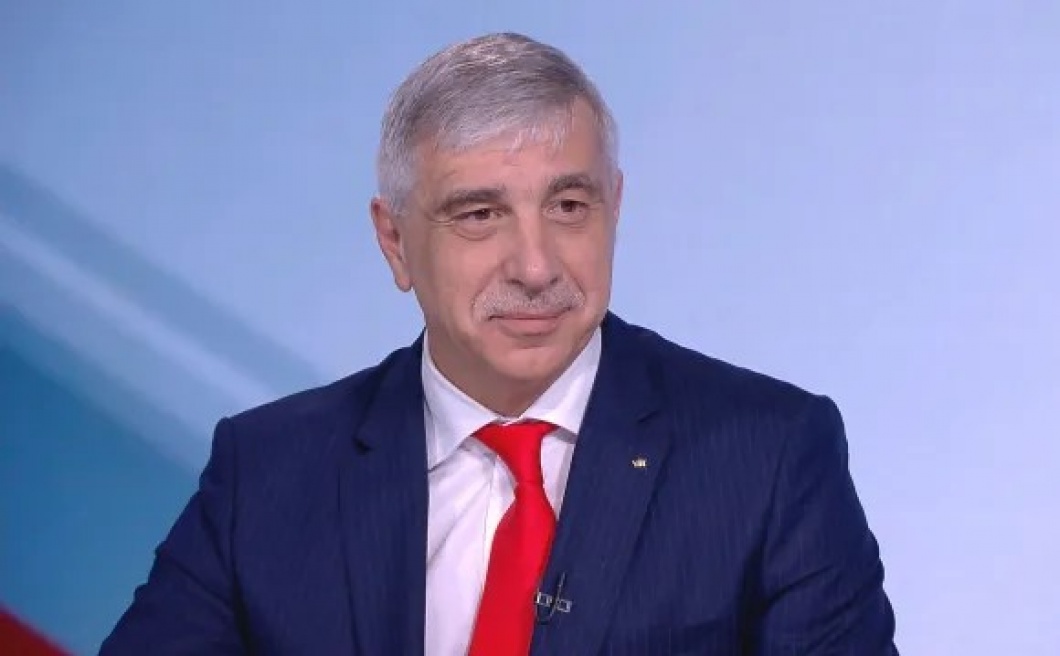
Judicial vetting in Kenya has also achieved significant success, as attorney-at-law Ivaylo Dermendjiev explains below.
They examine professional competence, ethical standards, and financial status.
The idea of judicial and magistrates’ vetting – a comprehensive review of the integrity and fitness of magistrates – inevitably arises in societies where trust in the judicial system is low.
Examples such as Kenya and Albania show that such mechanisms can lead to a genuine “cleansing” of the system. The question is whether such a model is applicable in Bulgaria and whether it would withstand scrutiny before the Constitutional Court of the Republic of Bulgaria.
It should be noted that judicial and magistrates’ vetting has been used with considerable success in Kenya, unlike vetting in the administration and the police. The vetting there is based on express provisions of the new Constitution of the Republic of Kenya of 2010 and is a consequence of the mass distrust in the country’s judicial system.
For statistical context, it is worth noting that Kenya’s administration and judicial system are derived from the British model and therefore have long-standing traditions. Yet despite the need for vetting there, at the time the new constitution was adopted, trust in Kenya’s judicial system was still significantly higher than the current level of trust in Bulgaria’s judicial system.
At the beginning of the vetting process in Kenya, trust in the judicial system stood at around 30–40%. At present, following the completion of the vetting process in Kenya, it is close to 57%. This contrasts with the modest 20–25% in Bulgaria, the lowest in the entire EU, where the general average is 55%.
The Kenyan model is a classic example of an extraordinary, transitional mechanism.
Following the constitutional reform of 2010, in the context of Kenya’s post-election crisis (2007–2008), all judges appointed before the reform were subjected to review by a special body – the Judges and Magistrates Vetting Board.
The procedure was not disciplinary in the classical sense, but rather an assessment of “suitability,” including an analysis of professional competence, ethical standards, and financial status.
The practice of the Vetting Board provides telling examples. Some judges were declared “unsuitable” because of serious discrepancies between income and assets – including cases in which magistrates were unable to explain the accumulation of assets significantly exceeding their official remuneration.
In other cases, the decisive factor proved to be the quality of the judicial acts they had delivered – systemic procedural violations or inconsistent case law calling their professional competence into question. There were also cases in which conduct in the courtroom – rude treatment of parties or lawyers – was used as an indicator of a lack of the necessary ethical standards.
Particularly revealing were the decisions concerning higher judicial levels. In some cases, judges from appellate courts were removed after findings of involvement in corrupt practices or dependencies on political and business circles. This demonstrates that vetting in Kenya was not limited to the lower levels of the system, but also affected its “elite.” At the same time, a significant number of magistrates successfully passed the review, which contributed to the legitimacy of the process.
An essential feature of the Kenyan model is that it allows a lower standard of proof and limited possibilities for appeal.
This enables faster decision-making, but also raises questions regarding guarantees of protection.
Despite this, Kenyan judicial practice accepts vetting as constitutionally permissible precisely because of its extraordinary and transitional nature.
One of the principal safeguards is the personal composition of the Vetting Board, the collective nature of its decisions, and the participation of international experts. Objectively speaking, it may be said that the most successful chair of the Board was Mr. Sharad Rao, currently a lawyer and international arbitrator.
The facts are these: across the three stages of the vetting process, between 10% and 25% of judges and magistrates in Kenya were removed; in Albania, between 50% and 60%; while in Bulgaria, under the disciplinary proceedings framework, the percentage is close to a statistical zero.
Such an approach, however, would be difficult to reconcile with Bulgaria’s constitutional framework. The main problem stems from the principle of irremovability of judges, which allows removal only on expressly stated grounds. A mass reassessment of sitting magistrates outside those grounds would amount to circumventing the constitutional guarantee of independence. In addition, the creation of an extraordinary body outside the judicial system would give rise to doubts of political influence, while limiting judicial review over its decisions would run contrary to the established case law of the Constitutional Court.
Albania’s experience showed that vetting is possible in a European context, but only under substantial conditions – express constitutional amendments, a detailed procedure, and enhanced international monitoring. Without such a constitutional basis, any attempt to introduce “hard” vetting in Bulgaria would be vulnerable and would likely be declared unconstitutional.
The reassessment of magistrates in Albania is carried out by an Independent Qualification Commission and the Special Appeals Chamber. The Commission performs the initial reassessment in each case and adopts decisions, while the Special Appeals Chamber hears appeals against those decisions. Another key body is the Public Commissioner, working in cooperation with international observers. Both the Public Commissioner and the magistrate subject to review are entitled to challenge the Commission’s decision before the Appeals Chamber. Thus, alongside ensuring transparency and independence of the judiciary, the possibility of appeal acts as a key mechanism for protecting the rights and procedural fairness owed to magistrates during the review.
The vetting process applies to all sitting judges, prosecutors, and members of judicial councils, as well as to those who have previously held such positions and may be reappointed within the system.
The legislation provides for situations in which magistrates may decline to participate in the transitional review procedure by submitting a resignation. In cases where a resignation is submitted and there are reasonable suspicions of serious violations, the procedure is terminated, but the magistrate is prohibited from holding managerial or senior positions within the judicial system for a period of 15 years.
Ultimately, judicial vetting stands at the boundary between the need for reform and the protection of the constitutional order. In Bulgarian conditions, it can be legitimate only if developed within the framework of the Constitution – or through its express amendment. Anything else risks undermining precisely those principles that vetting itself is intended to protect.
In conclusion, regardless of the shortcomings of such an approach, the newly elected political majority is called upon to make the broader judgment: whether to continue along the path of spiraling decline, or to take more radical measures that could increase public trust in the judicial system – especially among investors, without whom, frankly speaking, we cannot move forward.
Author: Dr. Ivaylo Dermendjiev is a former Chair of the Supreme Bar Council and Honorary Consul of the Republic of Kenya in Bulgaria. As regards the constitutional aspects, the article was coordinated with attorney-at-law Dr. Petar Slavov, a specialist in constitutional law.